NSX BGP Peering Issue in Holodeck 5.2x Workload Domain

Recently, while I was deploying an NSX Edge Cluster in the Workload domain in the Holodeck 5.2x (I deployed VCF 5.2.1) when I encountered an error in SDDC Manager “Verify NSX BGP Peering” which failed the Adding Edge Cluster task.

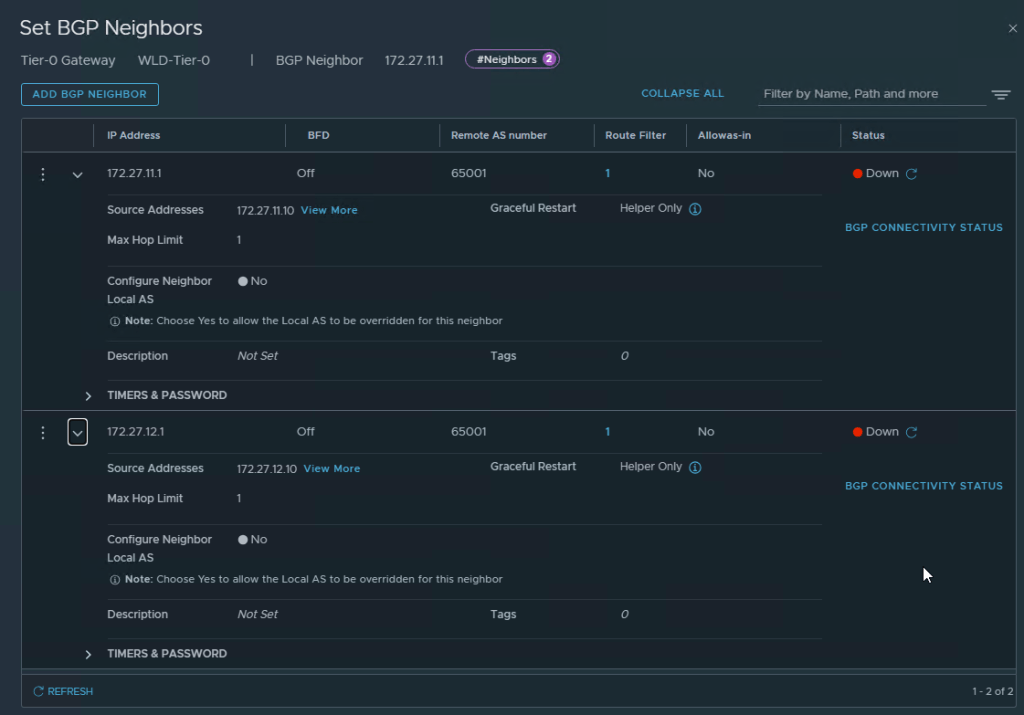
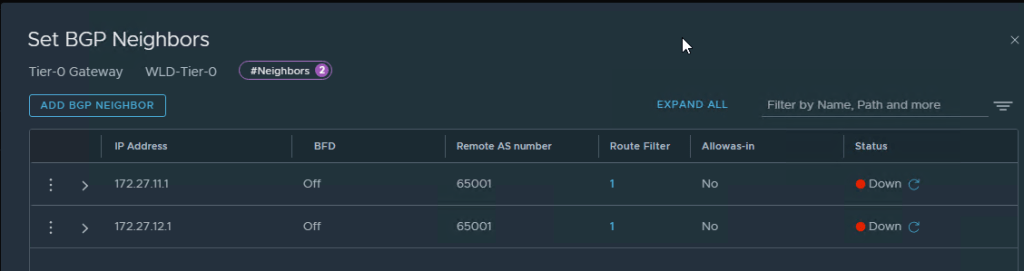
Here are the screens on how it looked once I logged into NSX Manager Web UI

After a lot of troubleshooting, I got some help from my fellow vExpert Abbed Sedkaoui who directed me to check the BGP Configuration in CloudBuilder and the config file to check was the gobgpd.conf file in /usr/bin
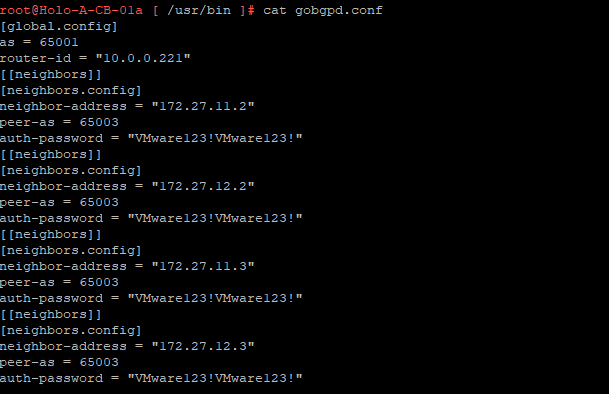
Edit this gobgpd.conf file and add the Tier-0 Uplink Interfaces as BGP Neighbors in this file as the below Screenshot

Once the file is saved (You will have to hit ESC and then type :wq!, hit Enter), you can restart the gobgpd service with the following command

systemctl restart gobgpd

This will restart the gobgpd service and in a few minutes you should see the BGP Neighbors going green instead of down status in the NSX Manager UI

here is the command to check the gobgpd status in cloud builder

systemctl status gobgpd

NOTE: All the above commands are to be executed as root in the cloudbuilder appliance, first you SSH into the appliance using admin credentials and then use su to login as root in the appliance. (su creds are same as admin creds in the holodeck lab)

Now you can restart the NSX BGP Peering task again in SDDC Manager and it should go through and create the Workload Domain.

How to troubleshoot vSAN issues?

Great Comprehensive Post on How to Check for VSAN Issues in your Environment !!

Shrikant's avatarVirtuallyVTrue

Hope you are doing all great, for today’s post I wanted to put together some of the commands/troubleshooting I’ve had used with VMware vSAN,

Identify a partitioned node from a VSAN Cluster(Hosts)

What a single partitioned node looks like:

~ # esxcli vsan cluster get
Cluster Information
 Enabled: true
 Current Local Time: 2020-10-25T10:35:19Z
 Local Node UUID: 507e7bd5-ad2f-6424-66cb-1cc1de253de4
 Local Node State: MASTER
 Local Node Health State: HEALTHY
 Sub-Cluster Master UUID: 507e7bd5-ad2f-6424-66cb-1cc1de253de4
 Sub-Cluster Backup UUID:
 Sub-Cluster UUID: 52e4fbe6-7fe4-9e44-f9eb-c2fc1da77631
 Sub-Cluster Membership Entry Revision: 7
 Sub-Cluster Member UUIDs: 507e7bd5-ad2f-6424-66cb-1cc1de253de4
 Sub-Cluster Membership UUID: ba45d050-2e84-c490-845f-1cc1de253de4
~ #

What a full 4-node cluster looks like (no partition)

~ # esxcli vsan cluster get Cluster Information Enabled: true Current Local Time: 2020-10-25T10:35:19Z Local Node UUID: 54188e3a-84fd-9a38-23ba-001b21168828 Local Node State: MASTER Local Node Health State: HEALTHY Sub-Cluster Master UUID: 54188e3a-84fd-9a38-23ba-001b21168828 Sub-Cluster Backup UUID: 545ca9af-ff4b-fc84-dcee-001f29595f9f Sub-Cluster UUID: 529ccbe4-81d2-89bc-7a70-a9c69bd23a19 Sub-Cluster Membership Entry Revision: 3 Sub-Cluster Member UUIDs: 54188e3a-84fd-9a38-23ba-001b21168828, 545ca9af-ff4bfc84-dcee-001f29595f9f…

View original post 1,361 more words